California Organic Mattress Guide
Choosing a Natural Latex Topper: What to Know About Feel, Thickness, and Care
A topper can soften a too-firm bed, add a little cushioning, or change how your mattress responds to pressure—without replacing the whole sleep surface. The right choice depends on more than a material label: thickness, latex construction, mattress condition, fit, and care all shape how the layer performs.
A small layer, a noticeable change
A mattress topper is a separate layer placed on top of a mattress, usually beneath a fitted sheet. It can influence the surface feel and pressure relief, but it cannot rebuild a worn-out mattress or correct every problem beneath it. That distinction is useful before shopping: a topper is best understood as an adjustment to a sleep surface that is still in reasonably sound condition.
Natural latex is one material people consider for this purpose. It is made from latex derived from the sap of rubber trees, then processed into a resilient foam. Depending on its formulation and construction, it can feel buoyant and responsive, cushioning the body while recovering its shape after pressure is removed. A latex topper may feel different from a slow-sinking foam layer: instead of gradually molding around the body, it often gives a more springy, gently lifted sensation.
That broad description is only a starting point. Latex products differ in firmness, density, thickness, processing, and cover materials. Even the same topper can feel different on two mattresses because the base underneath influences how far the body settles. A soft layer atop an already plush mattress may feel quite different from the same layer on a firm, flat surface.
For California shoppers researching an organic mattress topper, careful reading matters. “Natural,” “organic,” and “eco-friendly” are not interchangeable terms, and none alone describes the complete construction. The useful question is not simply whether a product carries an appealing label, but what each layer is made of, how its claims are verified, and whether its feel suits the sleeper and mattress.
Start with the mattress you already own
Before comparing toppers, take stock of the mattress beneath them. Lie in your usual position and notice where pressure builds, whether your hips or shoulders sink too far, and whether the surface feels uniformly uncomfortable or has a specific area that needs attention. Check for visible sagging, broken support, or a pronounced hollow. A topper can soften a firm surface, but it will follow the shape of a sagging mattress rather than restore its support.
Age is one consideration, but condition is more revealing. A relatively old mattress that remains level and supportive may still be a good candidate for a comfort adjustment. A newer mattress with a deep depression may not be. If the underlying support has deteriorated, a thicker layer might disguise the problem briefly while allowing it to remain.
Also consider the bed’s foundation. Slats that are too far apart, a flexible base, or an unsuitable foundation may change how the mattress behaves. Review the mattress maker’s recommendations and make sure the support system is appropriate before adding another layer. This is especially worth checking for adjustable beds, where the topper must bend with the base and stay in position as it moves.
Finally, measure the mattress rather than relying on its advertised size alone. Record its length, width, and depth, including any existing pad or quilted top that affects how a fitted sheet sits. A topper that shifts or leaves gaps at the edges can be distracting; one that makes sheets too tight can pull at corners or compress the layer. Check the topper’s dimensions and the depth of your sheets before deciding.
How thickness changes the feel
Thickness is one of the most visible specifications, but it is not a direct measure of quality or comfort. It indicates how much material sits between the sleeper and the mattress, and therefore how strongly the topper may alter the surface sensation. The exact result still depends on firmness, latex formulation, body weight, sleep position, and the mattress beneath it.
A thinner latex topper generally makes a more restrained adjustment. It may add a modest cushioning layer while leaving much of the original mattress feel intact. This can be appealing if the bed is broadly comfortable but a little too firm at the shoulders or hips. It may also suit someone who wants to experiment with surface comfort without adding a substantial new layer.
A thicker topper can create a more pronounced change. There is more material to compress, so the sleeper may experience deeper cushioning and a greater shift in how the mattress responds. For some people, that means welcome pressure relief; for others, it can make the bed feel too yielding or change the sense of support. Thicker does not automatically mean softer: a firm, thick layer may still feel quite supportive, while a thinner, softer layer can make a distinct impression.
Think of the decision as choosing the scale of an adjustment rather than selecting a universal “best” depth. If you are unsure, write down what you want to preserve as well as what you want to change. For instance, you may want a gentler surface while keeping the mattress’s underlying support and familiar response. That description is more informative than simply asking for the softest option.
- For a subtle change: consider a thinner layer and check that the mattress itself is already supportive.
- For a more noticeable comfort shift: compare thicker options, paying close attention to firmness and the way the mattress responds beneath them.
- For a mattress with visible sagging: investigate repair, replacement, or foundation concerns instead of expecting a topper to correct the structure.
These are starting points, not guarantees. Manufacturers may describe thickness and firmness differently, and personal comfort is subjective. Whenever possible, review the return, exchange, and trial terms before buying. A policy can matter as much as a specification when the final feel is difficult to predict from a description.
Firmness, pressure relief, and sleep position
Sleep position offers a practical way to think about comfort needs. Side sleepers often place more concentrated pressure on the shoulder and hip. Back sleepers may prefer a surface that cushions without letting the pelvis sink excessively. Stomach sleepers commonly need to pay attention to how much the midsection settles, since too much softness may feel uncomfortable. These patterns vary from person to person, and a position can change during the night.
Body shape and weight also affect how a topper compresses. A layer that feels gently cushioning to one person may feel firmer to another because it is compressed to a different degree. If two people share a bed, consider each sleeper’s needs, movement, and preference rather than relying on one person’s description of the bed’s feel. A topper covering the full mattress changes the surface for both sleepers.
Pressure relief is not the same as maximum softness. A useful surface allows the body to settle enough to feel comfortable while still providing a sense of stable support. Latex’s responsive character may appeal to people who prefer an easier-to-move-on surface, but no material guarantees a particular outcome for pain, posture, or sleep quality. Comfort judgments are personal, and persistent pain or sleep problems are best discussed with a qualified health professional.
When comparing an organic latex topper with other materials, consider the sensation you actually prefer. Latex tends to be described as buoyant and springy; memory foam is often associated with slower contouring; fiber-filled pads usually provide a lighter, more surface-level cushion. These are general tendencies, not exact predictions. Construction, cover fabric, and the mattress beneath can change the experience.
Understanding latex construction and labels
“Latex” identifies a broad material category, not a complete description of sourcing or manufacturing. A product can contain natural latex, synthetic latex, or a blend. If natural content is important to you, look for clear statements about the latex itself and the composition of every other layer. A cotton cover, wool batting, backing, adhesive, or finishing treatment may also be part of the overall construction.
Some latex is made using Dunlop or Talalay processes. These terms describe different manufacturing methods and can be useful when comparing product details, but they do not by themselves tell you which topper will feel best. Specifications such as firmness, thickness, and layer composition are still important. If a product description uses a process name without explaining the finished layer, ask what that means for the particular item.
Organic claims should be checked at the level of the material and the claim being made. Certifications have defined scopes: one may apply to textile fibers or processing, while another may address a particular latex material. A certification attached to a cover should not be assumed to certify every component in a topper. Check the certifying organization, the certified product or material, and whether the documentation is current.
For an organic mattress topper, read beyond the headline. Look for a detailed material list, a clear explanation of what is certified, and practical information about the cover and any additional layers. If wording is ambiguous—such as a vague claim that a product is “chemical-free”—seek a precise description rather than assuming the phrase means the same thing to every manufacturer. Transparency is more useful than a broad promise.
Obasan’s organic wool and latex topper can serve as a reference point when exploring this category: its described combination highlights how latex may be paired with wool and textile layers rather than offered as a bare foam slab. Use that example to frame questions, not to assume that every wool-and-latex topper has the same feel, certifications, or care requirements. Compare the specific product details for the item you are considering.
Wool, cotton, and the layers around latex
A topper is more than its core. The cover and any quilted or insulating layers affect its texture, breathability, handling, and care. Cotton may be used for a cover, while wool can appear as batting or padding. Each material brings its own properties, and the combination influences the surface that meets the sleeper.
Wool is often chosen for its ability to manage moisture and help moderate temperature, though individual experiences vary with climate, bedding, and personal comfort. A wool layer can also give a topper a different hand feel and construction than latex alone. If you have sensitivities or prefer not to use animal-derived materials, check whether wool is present and whether a suitable alternative is available.
Cotton covers may be woven or knitted, and their texture and stretch can affect how the topper lies over the mattress. A flexible cover may accommodate movement in the latex more readily than a tight, rigid one. Still, the cover should not be so loose that the layer bunches. Ask whether it is removable, washable, or intended to remain in place, and follow the stated instructions rather than treating all cotton covers alike.
When comparing materials, separate comfort questions from environmental questions. A fiber’s natural origin does not on its own establish that a finished product is certified organic or that its full supply chain meets a particular standard. Ask what is documented, which components are included, and where the manufacturer’s claims apply.
Fit, movement, and everyday practicality
A topper should sit evenly on the mattress, with dimensions that match the bed. Measure carefully, especially if the mattress is an unusual size or has a thick pillow top. California king and split configurations can require different measurements and sheet arrangements from standard king beds. If the bed is adjustable, confirm that the topper is suitable for the base and whether it needs to be secured.
Latex can be heavy, particularly in larger sizes or thicker constructions. Consider how the topper will be unpacked, placed, rotated, and cleaned. A substantial layer may take two people to handle safely. Check whether it arrives compressed, how long it needs to settle after unpacking, and whether the manufacturer provides specific setup guidance.
Movement is another practical consideration. A responsive material can make it easier to shift position, but a topper may also change how motion feels between partners. If movement transfer is a concern, look for construction details and trial opportunities. Do not assume a material name alone predicts how much movement another sleeper will notice.
Topper height can affect more than comfort. It may change the total bed height, make it harder to tuck sheets, or bring the sleep surface closer to a headboard or guardrail. In a nursery or another setting with safety requirements, do not add a topper to a sleep surface unless the relevant manufacturer guidance and safety standards specifically allow it. For infants, follow current safe-sleep guidance and use only a sleep surface designed for that purpose.
Care: protect the layer without damaging it
Care instructions vary by product, so the manufacturer’s label takes priority over general advice. Many latex cores are not designed for machine washing or routine soaking. Excess water, harsh cleaners, direct heat, or prolonged sunlight may damage a component or complicate drying. If a cover is removable, check whether it can be washed and how it should be dried before unzipping it.
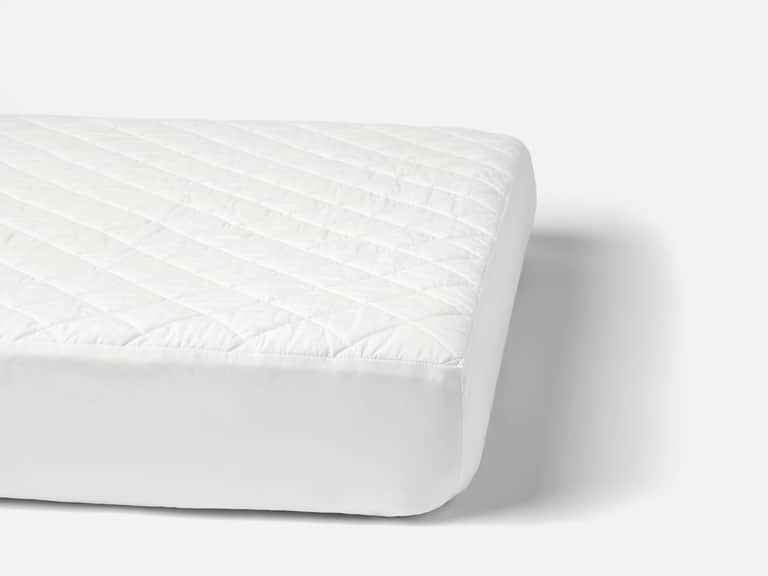
A fitted protector can help shield the topper from spills, body oils, dust, and everyday wear. Choose one that fits the combined depth of mattress and topper without compressing the sleep surface or pulling loose at the corners. Breathability and laundering instructions matter too. A waterproof protector may be useful in some households, but its backing and construction can change the bed’s surface feel.
For a small spot, follow the product’s care guidance and use only an approved method. Avoid saturating the latex core unless the maker expressly says it is safe. If a spill reaches inside, act promptly, blot rather than rub, and allow the affected area to dry fully in a ventilated place. Do not use a hair dryer, heater, or strong direct sunlight to speed the process unless the instructions permit it.
Regular airing can help keep bedding fresh, but it is not a substitute for cleaning instructions. Rotate the topper if the manufacturer recommends it, and inspect it occasionally for changes in shape, damage, or persistent odors. Avoid folding or bending the layer sharply during storage; the correct method depends on its construction and size.
- Read the care label before washing or spot cleaning.
- Use a protective cover that fits without excessive tension.
- Keep moisture and heat away from the latex core unless instructions state otherwise.
- Confirm storage and rotation recommendations with the manufacturer.
- Check warranty terms for exclusions related to stains, improper care, or support systems.
Good care begins before purchase. A topper with a non-removable cover may require a different protection strategy from one with a washable cover. If easy laundering is a priority, verify exactly which components can be cleaned at home and which require spot treatment or professional care.
A California-conscious way to compare claims
California shoppers may encounter broad environmental language across bedding labels and retail pages. The state’s sustainability-minded marketplace makes careful comparison especially useful, but a product being sold in California does not mean it has been approved, endorsed, or certified by the state. This guide is an independent consumer resource, not a California government publication.
Make a short record for each option: latex source and type, topper thickness, firmness description, cover and filling materials, relevant certifications, country or region of manufacture, care instructions, warranty, and return terms. Where a claim matters to your decision, look for supporting documentation or ask the seller to identify the certifying body and the specific certified component.
Environmental considerations can extend beyond ingredients. Durability, repairability, packaging, shipping distance, and end-of-life options all influence a product’s broader footprint. A long-lasting topper that suits your needs may prevent an unnecessary mattress replacement, but only if it genuinely improves a mattress that remains structurally sound. Ask how to dispose of or recycle the topper when it reaches the end of its useful life; local services and acceptance rules can vary.
Be attentive to language that treats “natural” as a guarantee of safety or performance. Material origin, certification, emissions testing, and consumer comfort are separate questions. A transparent seller should be able to explain what is in the product without turning one attribute into a promise about health or sleep outcomes.
A practical checklist before buying
Use this checklist to narrow a crowded selection into a few meaningful comparisons:
- Describe the problem: Is the mattress too firm, uneven, or simply lacking a little surface cushioning?
- Assess its condition: Rule out sagging, foundation problems, or damage that a topper cannot fix.
- Choose the scale of change: Compare thinner and thicker options according to how much you want the feel to shift.
- Match firmness to preference: Consider sleep position, body shape, and how the mattress compresses under you.
- Check construction: Identify natural, synthetic, or blended latex, along with any wool, cotton, or other components.
- Verify certification scope: Find out which exact material or product component is covered by each certification.
- Measure the bed: Confirm the topper’s dimensions, combined bed height, sheet depth, and adjustable-base compatibility.
- Plan for care: Review cleaning, protection, storage, and rotation instructions.
- Read the terms: Compare trial periods, returns, warranty coverage, shipping, and disposal options.
Whenever possible, test a topper on the mattress you intend to use it with. A showroom surface or a description on a screen cannot fully recreate your own bed, bedding, room temperature, or sleep habits. If a home trial is available, understand the conditions in advance, including any return shipping or packaging requirements.
Finding the right layer for your sleep surface
A natural latex topper is not a universal solution, but it can be a thoughtful way to adjust a mattress that still provides dependable support. Its feel comes from the interaction of thickness, firmness, construction, cover materials, and the bed beneath it. Small differences in any one of those elements can matter once the layer is used night after night.
Begin with the experience you want to change, then work outward: inspect the mattress, compare thickness and firmness, verify materials and certifications, and confirm fit and care requirements. Treat organic claims as something to investigate rather than a shortcut to a decision. A clear material list and transparent documentation offer a stronger basis for comparison than a broad environmental slogan.
In the end, the most suitable organic latex topper is the one that fits both the bed and the sleeper: comfortable without obscuring a damaged mattress, made of materials you can verify, and practical to protect and maintain. A measured choice can add a useful layer of comfort while helping you understand exactly what lies between you and a better night’s rest.
Frequently asked questions
Will a latex topper make a firm mattress softer?
It can soften the surface feel, depending on its thickness and firmness. The result also depends on the mattress underneath. A topper cannot correct a sagging or damaged support layer.
Is a thicker organic latex topper always more comfortable?
No. Thickness affects how much the surface may change, but comfort depends on firmness, construction, body shape, sleep position, and personal preference. A thicker layer may feel too yielding for some sleepers.
Does “natural latex” mean the entire topper is organic?
No. Natural latex describes a material source, while organic status and certification depend on specific standards and components. Check which parts of the topper are certified and what the certification covers.
How should a latex topper be cleaned?
Follow the maker’s instructions. Many latex cores should not be machine washed or saturated. A suitable protector can reduce spills and soil, while removable covers may have separate laundering directions.